
Your Skin Looks Fine From Far. But You Know It Isn't. It May be Comedonal Acne.
By The Acne Clinic | Acne Education | 6 min read
If you have ever angled your face under every light in the bathroom just to check, this one is for you.
Your skin looks fine in photos. Fine from across the room. Fine when someone else looks at you.
But you know. You can feel it. The tiny bumps across your forehead. The congestion on your nose. The texture on your cheeks that no amount of moisturiser, exfoliator, or that really expensive serum has ever fully sorted out.
Here is the thing: what you are describing might not be acne in the way most people picture it. But it is still your skin telling you something. And it has a name.
At The Acne Clinic in i12 Katong, we see this all the time. People who do not think they have "real acne" but whose skin has been quietly congested for years. Understanding what is actually going on is the first step to doing something about it.
What Your Skin Is Actually Saying
Sometimes the way we describe our skin and what is actually happening beneath it are two different things. Here is a quick reframe.
What you might think | What may actually be going on |
"My pores are just big" | Pores that appear enlarged may be blocked with oil and dead skin cells, which can be a sign of comedonal congestion |
"I just have bad skin" | Persistent texture and bumps may point to a specific, manageable skin concern rather than an inherent skin quality |
"My skincare isn't strong enough" | The issue may not be product strength but whether the products are targeting the right layer of the skin |
"I need to exfoliate more" | Over-exfoliation can actually worsen congestion by disrupting the skin barrier and increasing oil production |
"It's not really acne because it doesn't hurt" | Comedonal acne is a form of acne that does not involve inflammation or pain, so it often goes unrecognised for years |
"I just have to live with this texture" | Persistent comedonal congestion may respond well to the right assessment and a properly matched approach |
Not sure what your skin is actually telling you? That is completely normal. Comedonal acne is one of the most commonly misread skin concerns because it does not look the way most people expect acne to look. A consultation can help make sense of what is going on.
Why Comedonal Acne Should Not Be Treated Like Regular Acne
Here is what most people do when they notice texture and congestion. They exfoliate more. They try a stronger toner. They add another active ingredient to their routine. And then they wonder why nothing changes.
Comedonal acne is a buildup issue, not a surface issue. It forms when dead skin cells and excess oil block the hair follicle, creating either a closed plug beneath the skin or an open one at the surface. Neither type involves inflammation, which is precisely why the usual acne treatments often do not work on them.
Inflammatory acne responds to antibacterial and anti-inflammatory treatments. Comedonal acne needs something different. Something that addresses congestion at the follicle level, encourages proper skin cell turnover, and does not just dry out the surface while the buildup continues underneath.
Scrubbing harder tends to irritate the skin barrier. Layering more products tends to add to the congestion. What actually shifts comedonal acne is understanding the pattern and treating it in the right way.
The Big Idea
Comedonal acne is not about cleanliness and it is not about skincare effort. It is a buildup issue that forms inside the follicle. Treating the surface without addressing what is happening beneath it is why so many people feel like their skin never fully clears.
Tiny flesh-coloured or white bumps that are not red or sore?
Closed comedones create tiny bumps that make skin texture look rough or uneven.

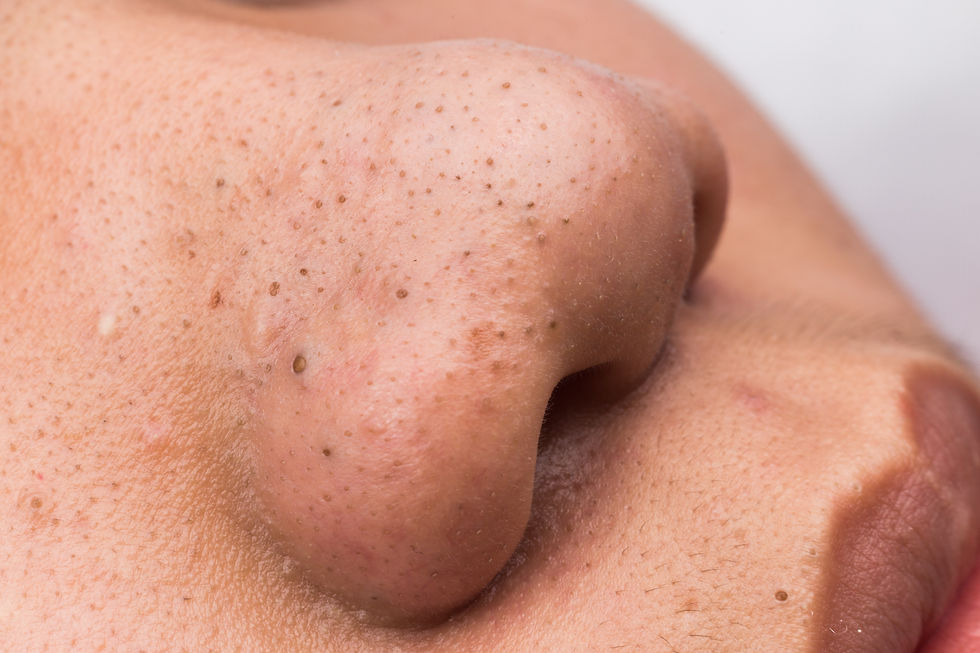
Blackheads on chin, and forehead that keep coming back.
Open comedones are dark, clogged pores caused by oil and dead skin buildup.
Skin feels congested all the time, even when I cannot see anything obvious
Hidden congestion can make skin feel bumpy, dull, and never fully clear.

Textured skin and occasional
Mixed acne means clogged pores and inflamed spots appearing together on different facial areas.

Still Not Sure What Your Skin Is Dealing With?
If your skin has been confusing you for a while, that is not a reflection of how much effort you are putting in. Comedonal acne is genuinely subtle, and it is easy to misread what is happening without a proper look.
At The Acne Clinic, a consultation means your skin gets assessed properly so care can be guided by what it actually needs, not by what worked for someone else.
Why This May Keep Happening
If your skin texture and congestion keeps returning no matter what you do, here is why that might be.
1. The products are working on the surface but not the follicle
Most over-the-counter skincare treats the top layer of the skin. Comedonal acne forms inside the follicle. There is a gap between where the product works and where the problem lives.
2. Over-exfoliation is disrupting the skin barrier
Scrubbing or using strong actives too frequently can strip the skin barrier, trigger excess oil production, and actually worsen congestion over time. More is not always better.
3. Comedogenic products are adding to the buildup
Some moisturisers, sunscreens, and makeup products contain ingredients that can clog pores, especially for skin that is already prone to comedonal congestion. What you put on your skin matters as much as what you use to treat it.
4. Cell turnover is not being supported properly
Comedonal acne is partly a cell turnover issue. When dead skin cells do not shed as they should, they accumulate inside the follicle. Supporting healthy skin cell turnover is a key part of managing this type of acne.
5. The skin type and pattern have not been properly mapped
Some people produce more oil in certain areas, have naturally smaller pores, or have skin that is particularly prone to congestion. Without understanding those tendencies, it is hard to build a routine or treatment plan that actually fits.
What Comedonal Acne Care Should Start With
Comedonal acne care should begin with understanding your skin, not with prescribing a peel or recommending a product.
That means looking at where the congestion is, how long it has been there, what tends to make it better or worse, and what you have already tried. It means assessing your skin properly before suggesting anything. And it means building a plan that fits your skin type, your lifestyle, and your goals.
Step | What it means |
1. Tell us your story | We listen to your skin history, lifestyle, concerns, and what you have already tried. |
2. Understand your skin | We assess your congestion pattern, skin type, and what your skin may need. |
3. Create your plan together | We recommend care that fits your skin, goals, and comfort level. |
4. Stay with you | We review, adjust, and guide your progress where needed. |
Comedonal acne is rarely a quick fix, but with the right approach it is very manageable. No two skin journeys are exactly the same, and what works well for one person's congestion may not be right for another.
The Takeaway
Comedonal acne is not about poor effort or cleanliness, and it is not something you simply have to live with. It is a buildup issue that forms inside the follicle, which means it needs an approach that looks beyond the surface.
If your skin feels rough, congested, or uneven no matter what you try, it is worth understanding properly. You are not imagining it, and you do not have to keep guessing.
Your skin deserves to feel as good as it looks from far.


